Speakers
Jon Brewer isif.asia
Networking the Pacific
This talk introduces an ISIF-funded study exploring the performance and interconnectivity of networks in the Pacific Islands. It covers a brief history of submarine cable and satellite networks servicing the Pacific, then evaluates network transit arrangements against best possible performance for a few selected networks. Evaluation methodologies including network probes will be discussed, and particular attention will be paid to Guam - a major submarine cable hub with surprisingly poor connectivity to the world.
All AusNOG talks (3)
- AusNOG 2017 The Future is Up in the Sky (Telco2 Limited) Slides
- AusNOG 2015 Networking the Pacific (isif.asia)This year Slides
- AusNOG 2013 TV White Space Technology for Rural Telecommunications (Consultant at Telco2 Limited) Slides
Biography
Jonathan is a former network operator who now designs and builds innovative networks for broadband, public safety, utilities, and the Internet of Things. He’s an approved radio certifier in New Zealand and licenses land mobile & microwave services. With the University of Oregon’s Network Startup Resource Center he spends some of his time teaching network and wireless engineering in developing economies.
Roland Dobbins Arbor Networks
Your Bitcoins or Your Site: An Analysis of the DDoS for Bitcoins (DD4BC) DDoS Extortion Campaign
In this presentation, we will discuss details of the ongoing DDoS for Bitcoins (DD4BC) DDoS extortion campaign, which has targeted multiple organizations in Australia and New Zealand, as well as in North America and Europe. The attack methodologies, evolution of the attack campaign, and discussion of the nature of the attacker(s) will be covered, along with a discussion of successful DDoS mitigation techniques which have proven effective against these attacks.
All AusNOG talks (7)
- AusNOG 2015 Your Bitcoins or Your Site: An Analysis of the DDoS for Bitcoins (DD4BC) DDoS Extortion Campaign (Arbor Networks)This year Slides
- AusNOG 2014 When the Sky is Falling: Network-Scale Mitigation of High-Volume Reflection/Amplification DDoS Attacks (Arbor Networks)
- AusNOG 2013 Breaking the Bank: An Analysis of the 2012 - 2013 'Triple Crown' Financial Industry DDoS attacks. (Arbor) Slides
- AusNOG 2012 In the Air Tonight: Operational Security Challenges for Wireless Internet Access Providers (Arbor) Slides
- AusNOG-05 (2011) State of Danger: Eliminating Excessive State in Network, Application, & Service Architectures as a DDoS Defense Strategy. (Arbor) Slides
- AusNOG-04 (2010) Obviating the Tragedy of the Commoms: Operational Security Implications of a National Broadband Network (Arbor Networks)
- AusNOG-03 (2009) The Emperor's New Cloud: An Analysis of the RoK/USA DDoS Attacks. (Arbor Networks) Slides
Biography
Roland Dobbins has 30 years of operational experience in the serviceprovider (SP) and large enterprise arenas, designing, deploying,operating, securing, maintaining, troubleshooting, and defending many ofthe highest-visibility networks in the world. He is a recognized industryleader in the fields of operational security (opsec) and networktelemetry, and has an extensive background in security product/featureinnovation, devising operational security requirements for networkinfrastructure devices, and protocol design.
His focus is on extending the availability, scalability, and security ofthe network infrastructure and the applications/services it enables, withan emphasis on flexible and resilient global service deliverycapabilities.
George Fong & Paul Brooks Internet Australia
Data Retention - who, what, how, and when.
The new Data Retention laws commenced on 13th April, and ISPs have until 13th October to become compliant with the new requirements. ISPs may apply for exemptions and extensions by submitting a DRIP – Data Retention Implementation Plan – but this must be submitted before 13th August to ensure it can be approved before the laws “go live”.
There is much fear, uncertainty, doubt and confusion over the new obligations, generating many hours of discussion and analysis on the AusNOG list and elsewhere.
A group of ISPs and carriers through Internet Australia and Comms Alliance have been working with the Attorney General’s Department to clarify areas of uncertainty and create (hopefully) easy-to- understand guidelines and explanations to help ISPs work out what they do and don’t need to do. Working with an ISP SIG within Internet Australia, we’ve tried to generate our own FAQ set as well as work with AGD to refine theirs.
In this session we’ll go through and summarise the guidance to help you understand:
- Who is captured by the new requirements, and what sort of providers are not
- What services you need to keep data for, and which you do not
- What data you need to keep, what you don’t need to keep
- AGDs expectations around data security and encryption
- Obligations of wholesalers vs retailers vs resellers – who needs to do what
- The process to apply for exemptions and extensions.
and answer questions from the floor as best we can, in language that doesn’t need a lawyer to interpret.
Biography
George Fong is CEO and owner of Lateral Plains, an ISP and ICT service provider based in Ballarat, and is President of Internet Australia. Paul Brooks is a consulting engineer and broadband expert and is Vice President of Internet Australia. George, Paul and Internet Australia generally has a proud history of injecting rational fact—based analysis and education with government and the user community on behalf of the ISP industry into regulatory issues such as Internet content filtering, and most recently data retention, ‘Section 313’ parliamentary enquiries and copyright issues.
Phillip Grasso-Nguyen Google
Are Network Engineers relevant in SDN world? Google's path to Network Systems Engineers
How relevant is traditional network engineering skills in a world moving to software defined networking. This presentation covers the evolution of the network engineer in Google to what we call a Network Systems Engineers. Transposing the traditional skills used to operate autonomous network devices to writing and managing large scale Network Systems. The presentation will go through lessons of this transformation; from technical challenges of equipment vendors to organisational institutional issues and people matters.
Biography
Phillip Grasso-Nguyen, head of Network Ops Software & Automation and Networking in Australia.
Spent the last 18 Years challenging the status quo in telecommunications and networking industry.
The past 8 years building up Google Australia Networking team in Engineering, Operations, software and automation to be a powerhouse networking site within Google.
Prior to Google, Phillip worked for Telstra, NTT Australia, Corvil in Europe. Magnadata (firstcorporate ISP in Australia).
Attained degrees in computer science and business from UTS, UNSW, USYD.
Raphael Ho Equinix
Green Data Centre Techniques
In the new information age, more and more of our lives are conducted onthe Internet. This means more servers, more data centers, and more powerrequired to support the requirements. While there are inherentenvironmental benefits in an on-line lifestyle (e.g. Shopping via Internetprobably has a lower carbon footprint than driving to the mall), the powerrequirement and environmental impact has shifted to data centre operators.
This presentation shows some of the techniques being used at Equinix andother data centre operators to become more green.
All AusNOG talks (5)
- AusNOG 2017 Internet Exchange Etiquette in the Digital Era (Equinix) Slides
- AusNOG 2015 Green Data Centre Techniques (Equinix)This year Slides
- AusNOG 2014 Peering Point Tutorial
- AusNOG-05 (2011) The past and future of cross connects (Equinix) Slides
- AusNOG-02 (2008) IPv6 in Asia - A consumer's perspective (Equinix)
Biography
As Head of Cloud and Interconnection Engineering & Operations for Equinix in Asia Pacific, Raphael Ho is responsible for the development of the Equinix Cloud Exchange platform and Interconnection strategy across the region.
Mr. Ho has over 20 years’ experience in international management in the telecoms and enterprise business, with strong specialties in IP/MPLS and subsea networking, network operations and network management systems.
Aside from his work at Equinix, Mr. Ho is also a board member of the Asia Pacific Internet Association and is a committee member of the Telecommunications Regulatory Affairs Advisory that counsels the HKSAR Government on telecom regulation. He is also a regular speaker at Network Operator Groups and Peering Forums, offering insights on various topics including Digital Transformation, Data Network Peering and subsea cable systems.
Mr. Ho was previously the chair of the Internet eXchange (IX) Special Interest Group (SIG) at Asia-Pacific Network Information Centre (APNIC), where he facilitated a forum for sharing information about the status and activities of IX points in the Asia Pacific region to the peering community.
Prior to Equinix, Mr. Ho served as the Director for ANOC Technical Support at Asia Netcom, supporting their transmission, IP and voice platforms. He has also served in various engineering/operations management positions in global organizations including Pihana Pacific, Level 3 Communications and Global One in Singapore, US and UK.
Mr. Ho holds a Bachelor of Engineering in Computing from Imperial College, London.
Jamie Horrell NZRS
Mapping New Zealand’s Broadband Infrastructure
NZRS is the technical operator of the .nz namespace and maintain a research and Internet data function within the team.
To support the research function and as an authoritative source of Internet data NZRS has worked on collecting, collating, creating and publishing geospatial data regarding b roadband provision in New Zealand.
The data is made available in four main ways:
- As publically accessible broadband finder and switcher service (to be released July 2015)
- As a data service for consumption either in web applications or traditional GIS software, via a series a web APIs.
- As vector query and raster query web APIs.
- As a raw data download.
The service has over 100 spatial telecommunications layers available, including fibre networks, ADSL coverage, cellular network coverage, radio high sites and wireless ISP coverage.
The data is used by policy makers and researchers in New Zealand and could potentially be made available for other uses.
Particular focus has been put into mapping smaller regional wireless ISPs and work has been into developing software the enable smaller providers to accurately map their own networks, using terrain based modelling. This tool is used both for quantifying existing coverage; creating usable GIS outputs for analysis and for planning of new networks.
The talk will cover:
- What broadband coverage is actually available
- How via some simple API calls it is possible for NZRS to determine broadband services available at New Zealand addresses.
- How the new National Broadband Map was developed and architected
- How the data service is used by professionals
- How data was acquired
- The open source radio propagation modelling software NZRS have developed to allow mapping of wireless networks
- Examples of analysis made possible by the data NZRS have available for reuse.
All AusNOG talks (2)
- AusNOG 2016 AUSNOG Archaeology - Natural Language Processing and xNOG Mailing Lists (IDC) Slides
- AusNOG 2015 Mapping New Zealand's Broadband Infrastructure (NZRS)This year Slides
Biography
Jamie is the Research Manager for connectivity and compute at IDC Australia, he has interests in data analysis, Internet operations, telecommunications and natural language processing.
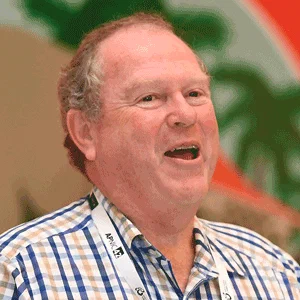
Geoff Huston APNIC
Testing Rolling Roots
Its been five years since the root of the DNS was signed using DNSSEC. The original intent was to perform a periodic roll of the key-signing-key (KSK) at regular intervals and it was originally envisaged to roll the KSK 5 years later, in 2015. This brings up a number of questions concerning the nature of the key roll and the sizes of the DNS responses that may be anticipated ruing the key roll. At APNIC we¹ve been helping out with this work, and our contribution has been in testing the resolvers we use to expose what DNS response sizes they can cope with, the behaviours seen in IPv4 and IPv6, the signing algorithms that are supported and the extent to which we use resolvers that are DNSSEC-aware.
All AusNOG talks (13)
- AusNOG 2026 Revocation (APNIC) SlidesVideo
- AusNOG 2025 Evolution of Transport Protocols (APNIC) SlidesVideo
- AusNOG 2024 Measuring Starlink (APNIC) SlidesVideo
- AusNOG 2023 Quick Look at QUIC (APNIC) SlidesVideo
- AusNOG 2021 Measuring RPKI Use in BGP (APNIC) Slides
- AusNOG 2019 TCP and BBR (APNIC) Slides
- AusNOG 2017 Some Thoughts on IoT (APNIC) Slides
- AusNOG 2015 Testing Rolling Roots (APNIC)This year Slides
- AusNOG-03 (2009) BGP in 2008 - is the BGP sky really falling? (APNIC) Slides
- AusNOG-03 (2009) Just what are we doing about this IPv6 transition? (APNIC) Slides
- AusNOG-02 (2008) IPv6 Failure is an Option (APNIC)
- AusNOG-01 (2007) Technology, Engineering, Religion and IPv? (APNIC) Slides
- AusNOG-01 (2007) The 4 byte ASN experience (APNIC) Slides
Biography
Geoff Huston is the Chief Scientist at APNIC, the Regional Internet Registry for the Asia Pacific. He has been involved in the development of the Internet in Austrsalia since its inception in the late 1980’s.
David Lambert Brocade
Applications for externalized control planes
Network controllers provide an abstracted network control function, opening up the network forwarding plane to external applications that can add additional functionality beyond what is possible with the relatively static control plane features and protocols that networking engineers are currently bound by.
We will explore the externalized control plane architecture, some of the first controller facilitated applications as well as some of the possible future use cases.
Biography
David Lambert is a Principal Systems Engineer at Brocade, working within APAC with service providers on IP routing technologies including transition strategies to cloud and software networking. He is a veteran of SP core and edge infrastructure.
James Paussa Facebook
ONE - One Network Engineer
At Facebook we only ever have a single network engineer operating the entire production network. This includes all troubleshooting, fault finding and firefighting. How do we do this? We have built a number of systems here, all by network engineers that allow us to detect, alert and mitigate faults fast, all while not a single human is involved. We strongly believe in automating ourselves out of a job so we can move onto new more interesting challenges. We’ll drive into some of the real problems we have faced in our network and reveal how some simple scripting allowed us to solve some major issues.
Michael Sallaway Opengear
Tips, techniques and tools for remote monitoring (even when the networkis down)
As network engineers know, networks consist of more than a run of fibre between two points. There are many potential failure points (power, equipment, environmental issues, third parties, etc.) To improve reliability, all these points must be monitored continuously, with problems detected and corrected quickly. In some cases, infrastructure is unavailable at these monitoring points, or the points themselves may be geographically remote, which complicates fault detection and remediation. This talk will discuss monitoring techniques and OSS (Operational Support System) monitoring tools that Opengear uses for monitoring services and reliably providing remote access (often via cellular networks) to diagnose and attempt to repair any issues found. It will also discuss some common monitoring and remote access deployment issues, with suggested workarounds.
Biography
Michael Sallaway is a Senior Software Engineer at Opengear. He has worked with Open Source networking technologies since 2008, first at Snapgear/Secure Computing building UTM firewall appliances, and now at Opengear, building console servers and remote access gateways. In his spare time he has been known to wave solder PCBs in his kitchen for his elaborate Christmas lights display .
Rajiv Shah BAE Systems Applied Intelligence
Big Data Beyond the Buzzword
CSPs hold a gold mine of customer and network data, which, with the right tools can be used to improve the network experience, as well as for customer value management.However, this presents the challenge of understanding and presenting this data to effectively utilise it, producing actual business benefit. This is a challenge that CSPs are increasingly failing to overcome.There are several reasons for this:Firstly, processing the vast quantities of data requires new tools (such as Hadoop), and new infrastructure and skills in this area are scarce.Secondly, the data itself is complex and few organisations have resources that understand the data and the tools available to analyse it.Thirdly, the ability to visualise, present and act on the data analysis is underdeveloped. In order to provide benefit, it is necessary to be able to translate analytic results into operational decision making that can improve network performance, reduce operational costs and/or increase revenue.Finally, many CSPs have not yet decided on their corporate posture to data analysis, with many having outdated privacy policies and internal processes.In this talk, we will discuss how these challenges can be addressed, and demonstrate the power of data and the insights that can be achieved when they are overcome.
Biography
Dr Rajiv Shah has more than 16 years’ experience in the technology industry, working with commercial and government sector customers to design and implement leading edge information intelligence solutions, turning information into actionable intelligence.Rajiv has worked with major telecommunications companies and Government organisations in the United Kingdom, United States and Australia, as well as leading complex international engagements, providing technical and engineering leadership, solution architecture and design, and designing and implementing communications, data and security solutions for carrier grade networks.Rajiv started at BAE Systems Applied Intelligence in 1996 as a technical consultant. He has held several positions with the company across the UK, US and Australia including: Head of Operations, National Security business unit; Head of Delivery and Operations, Electronic Systems Group; Head of Communications, Data and Security Solutions; and Telecommunications Sector Lead, Asia Pacific.
Mark Smith
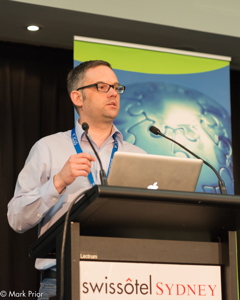
Why you should read RFCs and Internet Drafts (and what you need to know to do so)
Requests For Comments (RFCs) are the documents that describe the protocols that make the Internet work, published by the Internet Engineering Task Force (IETF). Internet Drafts (IDs) are the documents that are submitted to or created by the IETF for possible publication as RFCs.
In this presentation, I will talk about why I think you should read both RFCs and Internet Drafts, and the background information you need to know to best understand RFCs and IDs.
IDs are freely and publicly published for review and comments. If you wish to participate in their review, there’s a few things you should know about the IETF and its review and publication process, which I’ll describe.
All AusNOG talks (7)
- AusNOG 2019 Getting IPv6 Private Addressing Right Slides
- AusNOG 2018 The Robots are Coming! Slides
- AusNOG 2016 The Trouble with NAT Slides
- AusNOG 2015 Why you should read RFCs and Internet Drafts (and what you need to know to do so)This year Slides
- AusNOG 2014 Network Virtualisation: The Killer App for IPv6?
- AusNOG 2013 The Rapid Rise of the Mobile Multihomed Host, and What It Might Mean to the Network Slides
- AusNOG-05 (2011) Residential IPv6 CPE - What Not To Do and Other Observations Slides
Biography
Mark began working in the ICT industry in the early 1990s, initially working with desktop PCs and servers. He made networking his professional focus in 1998.
Mark has held a number of roles, performing support, administration, deployment, design and presenting training. He has worked for state government departments, national and multinational system integrators and state, national and international residential and corporate ISPs and telcos.
Mark has also presented at the AusNOG conference 5 times, has written blog articles for APNIC by invitation, and has contributed to the IETF since 2002, primarily in the IPv6 6man and v6ops working groups. He is an acknowledged reviewer and contributor to 31 IETF RFCs, and the author of 9 IPv6 related Internet Drafts.
Elly Tawhai APNIC
APNIC Update
This short presentation is designed to update the Australian network operations industry covering what is happening around the world with Internet resources. Included are current statistics on AS numbers, IPv4, and IPv6 address delegations, updates on Internet resource policies (such as implementation of recovered IPv4 address blocks), IPv4 markets and transfers, interface service improvement along with other recent APNIC news, and affects on the local industry.
All AusNOG talks (7)
- AusNOG 2017 APNIC Update (APNIC) Slides
- AusNOG 2016 APNIC Update: IPv4 waiting list (APNIC) Slides
- AusNOG 2015 APNIC Update (APNIC)This year Slides
- AusNOG 2014 APNIC Update (APNIC)
- AusNOG 2012 APNIC Update (APNIC) Slides
- AusNOG-03 (2009) Whats happening within APNIC, APNIC update (APNIC) Slides
- AusNOG-01 (2007) APNIC Update (APNIC)

Thomas Weible Flexoptix
FFO - fracking fiber optic
LC plugs are not the only ones now that we have QSFP+. Should you use MPO or MTP. What about ST, LC, SC, E2000 or the new LC Uniboot plugs ? What are the compromises and benefits of each solution.Did you know that polarity in optical MPO matters ? And why can the polish of a plug cause headache during on-site installation.Thomas will give an overview of the connectors and fibre options in the datacentre now we have 40G und 100G as a standard. Especially for these parallel transmission applications you should consider to rethink your wiring if you don¹t want to get stuck in troubleshooting your links.Finally some practical examples of broken optical components after and during field installation real cases which happen every day even in 2015 were fiber optic is commodity.
All AusNOG talks (4)
- AusNOG 2026 Channelmania! – future proof your DWDM network topology while keeping it flexible for 1.6T (Flexoptix) SlidesVideo
- AusNOG 2024 Coherent optical transceivers - current capabilities and future possibilities (Flexoptix) Slides
- AusNOG 2018 400G - don't get confused with this transceiver generation (Flexoptix) Slides
- AusNOG 2015 FFO - fracking fiber optic (Flexoptix)This year Slides
Biography
Thomas Weible is the creative brain of FLEXOPTIX. A real rebel who dreams up innovations such as the FLEXBOX. He dives deep into the inner life of optics and loves experimenting on real-life problems with our customers. For more than 17 years he has been part of the internet community and has specialized in optical networking.
David Wilde AARNet
The Australian Wide-Area SDN Testbed
Software Defined Networking (SDN) is rapidly emerging as a technology with potential to improve network flexibility via software-based management and control. To date, development has been centred around data-centre and campus networks, and relatively little work has been done on the applicability of SDN to wide area and carrier networks.
A consortium of researchers from nine Universities and the CSIRO, led by UNSW, has been awarded a LIEF grant by the Australian Research Council to deploy SDN equipment within each of their labs. These sites are being interconnected by AARNet to create a national wide-area SDN testbed environment, with the potential to peer internationally with testbeds in the USA, Europe and elsewhere.
This testbed is helping us better understand the SDN ecosystem - Openflow-enabled hardware (Noviflow, Pica8, Corsa), controller software (Floodlight, Ryu, ONOS), application development APIs, and SDN applications themselves.Building this wide-area testbed is helping us learn the complexity, maturity, performance, and scalability aspects of carrier SDN deployment, as well as identify current gaps. The intended result is a growing store of knowledge and experience, to be shared with network operators who are potentially interested in exploring SDN solutions.
In this presentation, the architecture of the SDN testbed will be presented, along with examples of the planned research experiments and potential use-cases as they relate to the network operator community.
Biography
David Wilde joined AARNet, Australia’s Academic and Research Network, in 2010, taking on the role of Network Architect in 2011.
His primary focus has been on developing the architecture and driving the rollout of the “AARNet4” project, upgrading AARNet’s transmission and IP networks to 100Gbps capabilities. He is also responsible for planning AARNet’s future technology roadmap, to ensure that AARNet rides at the forefront of technology in order to better support the R&E activities and services required by AARNet’s customers and users across Australia.
David began his career in computer networks in the late 90s at the University of New South Wales, and has since worked in a variety of technical and managerial roles for telecommunications operators and service providers across Australia and Europe. Prior to joining AARNet he was founder and CTO of a boutique Cisco Certified network integrator in France.
David holds a B.E.(Hons) and a B.Sc. from Monash University, and has maintained his active CCIE certification since 2001.