Speakers
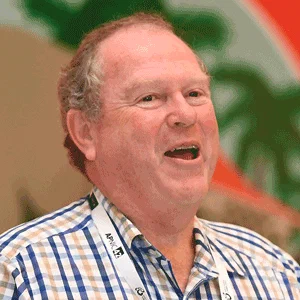
Geoff Huston APNIC
Technology, Engineering, Religion and IPv?
For more than a decade we’ve been hearing that the end of the Ipv4 world is nigh and that we’d need to repent and embrace IPv6 - and as an industry we’ve been ignoring the message. This presentation will look at the numbers behind Internet’s address consumption and start looking at what life for the Internet may look like after the IPv4 address pool in the sky runs dry.
All AusNOG talks (13)
- AusNOG 2026 Revocation (APNIC) SlidesVideo
- AusNOG 2025 Evolution of Transport Protocols (APNIC) SlidesVideo
- AusNOG 2024 Measuring Starlink (APNIC) SlidesVideo
- AusNOG 2023 Quick Look at QUIC (APNIC) SlidesVideo
- AusNOG 2021 Measuring RPKI Use in BGP (APNIC) Slides
- AusNOG 2019 TCP and BBR (APNIC) Slides
- AusNOG 2017 Some Thoughts on IoT (APNIC) Slides
- AusNOG 2015 Testing Rolling Roots (APNIC) Slides
- AusNOG-03 (2009) BGP in 2008 - is the BGP sky really falling? (APNIC) Slides
- AusNOG-03 (2009) Just what are we doing about this IPv6 transition? (APNIC) Slides
- AusNOG-02 (2008) IPv6 Failure is an Option (APNIC)
- AusNOG-01 (2007) Technology, Engineering, Religion and IPv? (APNIC)This year Slides
- AusNOG-01 (2007) The 4 byte ASN experience (APNIC)This year Slides
Biography
Geoff Huston is the Chief Scientist at APNIC, the Regional Internet Registry for the Asia Pacific. He has been involved in the development of the Internet in Austrsalia since its inception in the late 1980’s.
Geoff Huston APNIC
4Byte ASNs overview and experience
Not content with enlightening the AusNOG-01 audience only once, Geoff will also share his experiences on the 4 Byte ASN project.
All AusNOG talks (13)
- AusNOG 2026 Revocation (APNIC) SlidesVideo
- AusNOG 2025 Evolution of Transport Protocols (APNIC) SlidesVideo
- AusNOG 2024 Measuring Starlink (APNIC) SlidesVideo
- AusNOG 2023 Quick Look at QUIC (APNIC) SlidesVideo
- AusNOG 2021 Measuring RPKI Use in BGP (APNIC) Slides
- AusNOG 2019 TCP and BBR (APNIC) Slides
- AusNOG 2017 Some Thoughts on IoT (APNIC) Slides
- AusNOG 2015 Testing Rolling Roots (APNIC) Slides
- AusNOG-03 (2009) BGP in 2008 - is the BGP sky really falling? (APNIC) Slides
- AusNOG-03 (2009) Just what are we doing about this IPv6 transition? (APNIC) Slides
- AusNOG-02 (2008) IPv6 Failure is an Option (APNIC)
- AusNOG-01 (2007) Technology, Engineering, Religion and IPv? (APNIC)This year Slides
- AusNOG-01 (2007) The 4 byte ASN experience (APNIC)This year Slides
Biography
Geoff Huston is the Chief Scientist at APNIC, the Regional Internet Registry for the Asia Pacific. He has been involved in the development of the Internet in Austrsalia since its inception in the late 1980’s.
Dr. Jose Nazario Arbor Networks
BlackEnergy DDoS Bot Analysis
BlackEnergy is an HTTP-based botnet used primarily for DDoS attacks. Unlike most common bots, this bot does not communicate with the botnet master using IRC. Also, we do not see any exploit activities from this bot, unlike a traditional IRC bot. This is a small (under 50KB) binary for the Windows platform that uses a simple grammar to communicate. Most of the botnets we have been tracking (over 30 at present) are located in Malaysian and Russian IP address space and have targeted Russian sites with their DDoS attacks.
Bill Norton Equinix Inc.
Video Internet: The Next Wave of Massive Disruption to the Peering Ecosystem
Cable companies, content providers and ISPs constantly adjust their networks and networking relationships to improve performance, gain greater control over the end-user experience, and lower overall operating costs. Mr. Norton’s research indicates that the growing wave of video traffic presents a likely disruption to the current models of Internet traffic distribution. This presentation examines the potential volumes of video-based traffic in the near future, presents four common means of content distribution, and compares the costs of each. These technical and economic factors will shape the way the worldwide network is grown in coming years as all parties adjust to the wave of video traffic.
All AusNOG talks (3)
- AusNOG-01 (2007) Video Internet: The next wave of disruption (Equinix)This year
- AusNOG-01 (2007) Equinix Update (Equinix)This year
- AusNOG-01 (2007) Peering Simulation Game (Equinix)This year
Bill Norton Equinix Inc.
Peering Simulation Game
This live simulation pulls four audience members to play the roles of Peering Coordinator in a confined open market for ISP services. Each ISP rolls the die, acquires network territories, receives revenue and pays transit fees to the incumbent “tier 1 ISPs.” If the ISPs build their network into Internet Exchange Points, they can “peer” with the other ISPs in the game. However, they need to negotiate the terms of the interconnect, which brings into view the relative values of peering to each player in the negotiation. This game has evolved over the years and has proven to be an illuminating, fun and lively exploration of peering.
All AusNOG talks (3)
- AusNOG-01 (2007) Video Internet: The next wave of disruption (Equinix)This year
- AusNOG-01 (2007) Equinix Update (Equinix)This year
- AusNOG-01 (2007) Peering Simulation Game (Equinix)This year
John Lindsay Internode/Agile
Lessons learned while deploying ADSL2+
John will detail Internode’s experiences deploying DSLAMs and ADSL2+ on a national level.
Stephen Baxter PIPE Networks
Submarine Cable 101
Ever tried to bury a fiber cable 2000m below the ocean ? All ISPs and Carriers use them but what do you really know about them ? Submarine capacity in Australia is one of the most highly prized segments of a network - find out about how they are built and the features of all submarine networks that allow for high bandwidth, future proof upgrades and very high system uptimes that we have all come to rely on.
All AusNOG talks (2)
- AusNOG-01 (2007) Submarine Cable 101 (PIPE Networks)This year Slides
- AusNOG-01 (2007) PIPE Update (PIPE Networks)This year Slides
Stephen Baxter PIPE Networks
The Status of Internet Peering in Australia with PIPE Networks
This talk will cover the current Internet peering environment in Australia. It will provides statistics on traffic and route levels, data on interfaces types and speeds and some analysis on what type of content flows via peering Australia. We will discuss the rise of the Content Delivery Network in peering and how the trends in traffic levels are coupled to other trends in the Internet market.
All AusNOG talks (2)
- AusNOG-01 (2007) Submarine Cable 101 (PIPE Networks)This year Slides
- AusNOG-01 (2007) PIPE Update (PIPE Networks)This year Slides
Paul Brooks Layer10
The state-of-play VDSL2
All AusNOG talks (8)
- AusNOG 2022 The Internet Downunder (the sea) (Internet Australia) Slides
- AusNOG 2016 Optical Communications - where Physics beats Standards (Trident Subsea Cable) Slides
- AusNOG 2015 Data Retention - who, what, how, and when. (Internet Australia) Slides
- AusNOG 2013 Delay Tolerant Networking, and it's application to the Interplanetary Network (www.ipnsig.org) (Layer 10)
- AusNOG-03 (2009) Building optical networks with WDM (without burning your fingers) (Vocus) Slides
- AusNOG-03 (2009) Beyond SDH - buying and selling Wavelengths (Vocus) Slides
- AusNOG-01 (2007) VDSL2, how it relates to ADSL2+ and SHDSL (Layer10)This year Slides
- AusNOG-01 (2007) Inter-Provider Interconnect Standards (Layer10)This year
Biography
Paul leads the technology team at Trident developing a new subsea optical fibre cable from Perth to Singapore.
Sometimes described as a “Serial CTO”, Paul has over 20 years direct experience in domestic and international carriers, wide-scale residential NGN access network deployment and broadband video delivery, with executive technical leadership roles in global carriers such as Global One/Sprint International, and Australian service providers including TransACT Communications, Basslink, Vocus Communications and other start-ups.
Including this one, Paul has spoken at at least eight AusNOGs, attended nine, and collected every AusNOG t-shirt since inception.
Mark Prior
Real World IPv6
The topic will cover the imminent exhaustion IPv4 and its effects on IPV6 from the perspective of Content Providers, ISPs as well as the Vendors. Breaking out from there Mark will address the issues of real world deployment of IPv6 in addition to finding a current catalyst to encourage the investment of time and infrastrucutre into IPv6. Finally Mark demonstrates how to easily make a start … showing that it ain’t that hard after all.
All AusNOG talks (2)
- AusNOG-02 (2008) Building Remote POPs (Juniper) Slides
- AusNOG-01 (2007) Real World IPv6This year Slides
Rahul Vir Foundry
Protection and Fault Recovery at Internet Peering Points using 802.1ag CFM
Service Providers at Internet Peering points have the challenge of monitoring and troubleshooting links that span multiple operators. Current diagnostic tools are either Layer 3 tools like ping and traceroute that offer no visibility of the underlying Layer 2 network or are proprietary and may not work between operators. Monitoring tools available today also are either proprietary or are constrained in the information they provide. With the recent developments in IEEE in ratifying 802.1ag Connectivity Fault Management (CFM) as a standard, a very attractive OAM toolset is available that provides Continuity check, loopback and linktrace. With this the Service providers, Exchange Point providers and Co-location providers have new tools to address the diagnostic challenges and provide higher availability. The presentation will also provide an overview of CFM and presents an example of troubleshooting a network using these tools.
Shara Evans Market Clarity
State of the Market, Nov. 2007
Shara will share insight on the current state of the Australian Internet and VoIP services market. Shara’s talk will draw upon Market Clarity’s extensive databases and will include: Key facts and figures on the rollout of broadband infrastructure in Australia - including new GIS-based maps of telecoms infrastructure Assessing the impact of infrastructure-based initiatives Key facts and figures on the Aussie VoIP market, and the correlation between broadband infrastructure and VoIP services
Guy Tal LimeLight Networks Inc.
A Foray into MPLS
Discussing operational issues arising from architectural decisions made in an MPLS-TE enabled network